Cluster Pay Innovations Drive New Video Slot Configurations Across Britain's Licensed Platforms
Written by Felix Vogel · Jun 26, 2026
Cluster Pay Innovations Drive New Video Slot Configurations Across Britain's Licensed Platforms
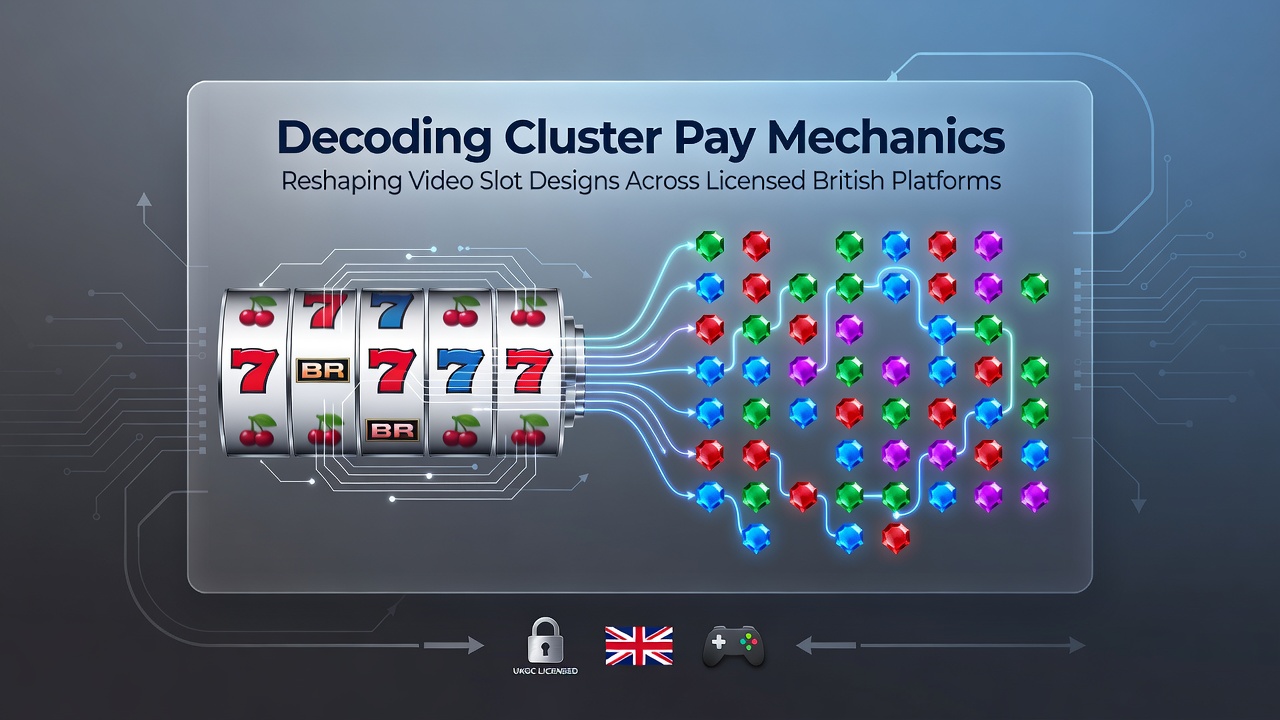
Cluster pay mechanics replace traditional paylines with systems where matching symbols form groups of adjacent positions, and these groups trigger payouts once they reach minimum sizes set by each game. Observers note that developers adjust grid sizes, symbol behaviors, and cascade features to fit this format, while licensed British platforms integrate the resulting titles under existing remote gaming standards that took effect by June 2026.
Research from industry reports shows cluster formations often span 8 to 20 symbols depending on the title, and payouts scale with cluster size rather than fixed line combinations. Data indicates this approach allows multiple winning groups to appear on a single spin, which changes how reels and symbols interact compared with older payline structures.
Core Differences Between Cluster Pays and Payline Systems
Traditional paylines require symbols to land on predefined paths, whereas cluster pays evaluate any connected group that touches horizontally or vertically. Experts have observed that this shift removes the need for fixed lines and instead emphasizes grid coverage, which in turn influences reel height, symbol density, and animation timing.
Studies found that cluster titles frequently incorporate tumbling or cascading reels after each win, clearing matched symbols and allowing new ones to drop into place. Those who've analyzed play patterns note that this creates chained sequences within one paid spin, and operators on British platforms must display the resulting win sequences clearly to meet transparency rules.
Technical Adjustments in Reel Design and Symbol Behavior
Design teams modify symbol weighting so that high-value icons appear less frequently but form larger clusters when they land. According to engineering documentation from several studios, random number generators now account for adjacency probabilities rather than line alignments, and this recalibration affects overall return-to-player calculations that platforms must publish.
Additional modifiers such as wild symbols that expand across clusters or special icons that split into multiples appear more often in these formats. Figures reveal that these elements increase visual complexity while still complying with testing standards required for British market approval.
Player Engagement Patterns Observed on Licensed Sites
Session data collected across multiple platforms indicates that cluster-based games produce longer average play durations when cascade chains occur frequently. Observers note that users often watch successive drops without additional stake input, and this mechanic aligns with the steady engagement metrics reported in aggregated industry summaries.
What's interesting is how bonus rounds adapt to cluster logic by awarding extra spins that maintain the same grid and evaluation rules. People who've tracked feature triggers report that free-spin modes sometimes introduce multiplier symbols that attach to entire clusters, raising potential returns without altering base stake limits.

Regulatory Context and Platform Compliance
British platforms must ensure cluster evaluation algorithms undergo independent testing before release, and June 2026 updates to remote gaming standards reinforced requirements for clear win explanations during chained sequences. Licensing bodies outside the primary UK framework, such as those referenced in international regulatory summaries, apply comparable verification steps that influence how studios prepare titles for multiple markets.
Stake limits and reality-check prompts remain unchanged regardless of pay mechanic, yet display interfaces now highlight cluster boundaries during wins to support informed play. Research indicates these visual cues reduce confusion when multiple overlapping groups form simultaneously.
Examples of Titles Using Cluster Mechanics on British Platforms
Several established releases demonstrate the format's flexibility. One title uses a 7x7 grid where clusters of 5 or more identical gems trigger payouts and initiate cascades, while another employs hexagonal symbol placement that creates diagonal connections in addition to standard adjacency. Platforms present these options alongside traditional line-based games, allowing users to select based on preference.
Case studies from development teams show that cluster sizes and payout tables receive fine-tuning during certification to maintain consistent mathematical models. Data from aggregated European gaming association reports, including contributions referenced by the European Gaming Association, confirms that such adjustments keep return percentages within approved ranges across licensed operators.
Conclusion
Cluster pay systems continue to influence video slot architecture on British platforms through changes in grid layout, symbol interaction, and evaluation timing. As of June 2026, these mechanics appear in an expanding selection of titles that meet regulatory standards for transparency and fairness, while operators present them alongside established formats to accommodate varied player preferences. Ongoing technical refinements ensure cluster formations remain compatible with existing compliance frameworks across licensed environments.